
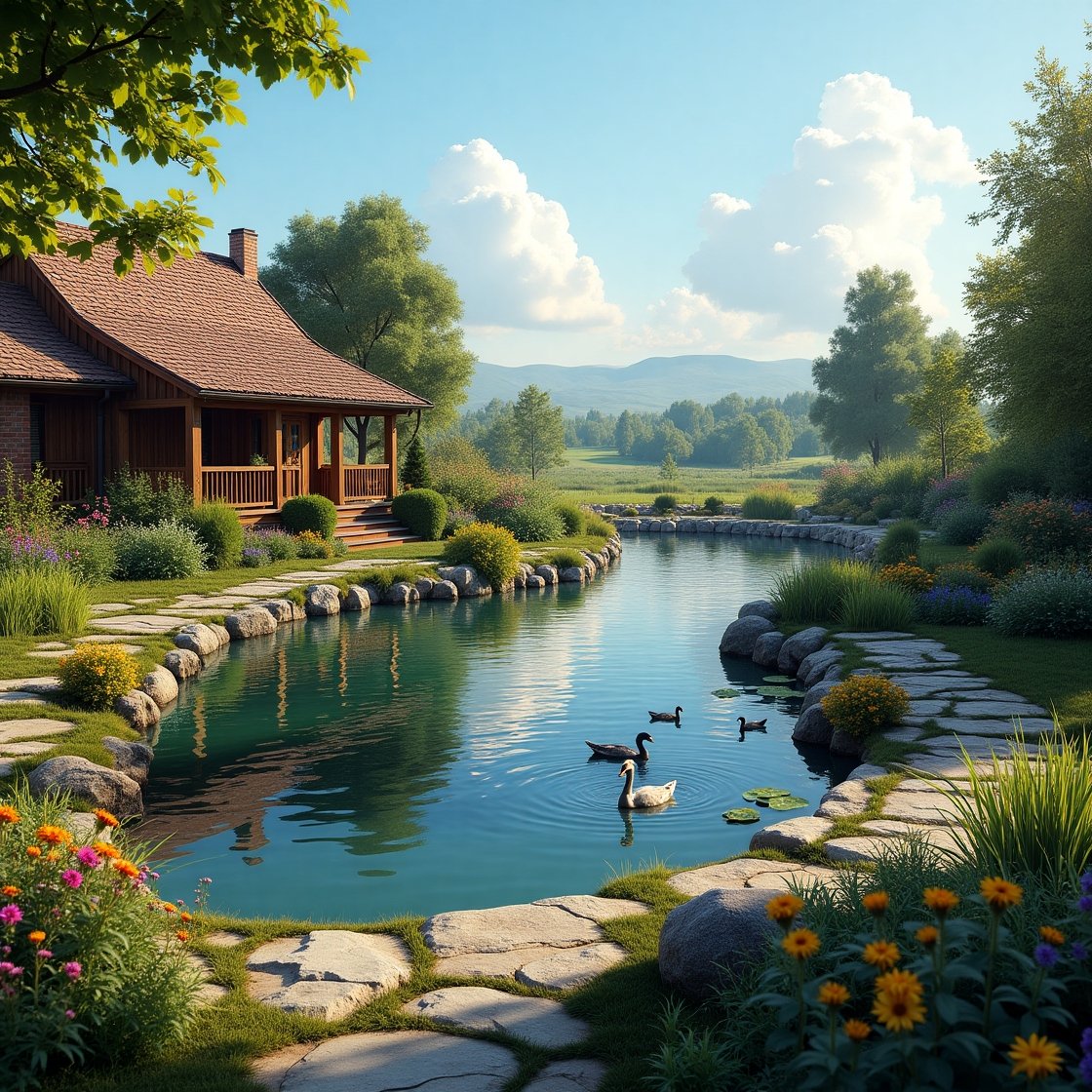
Few features can enhance a rural property more than a well-designed ornamental pond. Whether large or small, still or flowing, natural or slightly modernized, a pond brings visual beauty, wildlife, and peaceful ambiance to your sítio or chácara.
In this article, you’ll learn how to design, construct, and maintain a pond that becomes a focal point for relaxation, reflection, and biodiversity — all while adding significant value and charm to your land.
1. Why Create a Pond on Your Country Property?
An ornamental pond offers benefits that go beyond aesthetics.
Practical and emotional rewards:
- Invites birds, frogs, butterflies, and dragonflies
- Acts as a natural cooling zone on hot days
- Improves landscape harmony
- Offers a tranquil setting for meditation, yoga, or reading
- Can be used to raise ornamental fish (like koi or tilapia)
- Creates a mini-ecosystem that teaches sustainability and balance
Unlike swimming pools or large constructions, a pond can be both low-cost and low-maintenance when built thoughtfully.
2. Choose the Ideal Location for Your Pond
The site you choose will determine your pond’s success.
Look for:
- A spot with partial sun (4–6 hours/day)
- Natural slopes or depressions to assist water flow
- Protection from strong winds and falling leaves
- Good drainage nearby to avoid flooding
- Visibility from your porch, deck, or social areas
Avoid placing ponds directly under large trees (too much leaf litter) or near septic systems and unstable ground.
3. Decide on Size and Shape: Blend With Nature
Your pond can be round, kidney-shaped, oval, or organic — the goal is to match the natural flow of your property.
Small ponds:
- 2 to 4 meters wide
- Easy to manage
- Perfect for decorative fish, plants, and reflection
Medium to large ponds:
- 5 to 10+ meters
- Can include walkways, bridges, or platforms
- Suitable for large aquatic plants or even small boats
Use natural curves and gentle banks. Avoid square or geometric shapes — they feel out of place in rural landscapes.
4. Choose Construction Method: Liner vs. Natural Clay
There are two main ways to build a pond:
1. Liner ponds:
- Use rubber or PVC liners
- Ideal for custom shapes
- Easy to install and control water level
- Durable and widely available
2. Clay-sealed ponds:
- Compact natural clay into the pond basin
- Best for large ponds or natural lakes
- More eco-integrated but harder to seal fully
Liner ponds are better for beginners and decorative ponds. Choose UV-resistant, puncture-proof liners for longevity.
5. Dig and Shape the Pond Safely
Mark the shape with rope or spray paint. Then:
- Dig the main basin (60 cm–1.5 m depth depending on goal)
- Create shelves at different levels for aquatic plants
- Remove sharp rocks or roots
- Add underlayment (geotextile or sand layer)
- Place the liner and secure it with stones or soil
- Fill gradually with water — using rainwater if possible
You can also use excavators or hire local workers for bigger projects.
6. Add Aquatic Plants for Beauty and Balance
Plants are essential to a healthy pond. They oxygenate water, control algae, and attract wildlife.
Shallow-edge plants:
- Water lilies
- Lotus
- Cattails
- Pickerelweed
Floating plants:
- Water lettuce
- Duckweed
- Water hyacinth
Submerged oxygenators:
- Hornwort
- Anacharis
- Vallisneria
Aim for a mix of types and colors. Avoid invasive species that spread aggressively.
7. Include Decorative Elements for Style
A pond is more than a hole with water — it’s a landscape feature.
Decorative ideas:
- Stone or wooden borders
- A small bridge or stepping stones
- Solar-powered fountains or bubblers
- Lighting around the perimeter (warm LEDs, lanterns)
- Rustic benches, hammocks, or a gazebo nearby
- A walkway or gravel path leading to the pond
Frame the pond with flowering shrubs, grasses, and natural rocks for a balanced, welcoming look.
8. Add Fish or Wildlife (Optional but Rewarding)
Fish add motion and life to your pond — but require care.
Popular ornamental species:
- Koi (colorful, social, need depth and clean water)
- Goldfish (smaller and easier)
- Native tilapia (resistant and hardy)
Tips:
- Don’t overpopulate
- Install a small filter if the pond gets murky
- Avoid mixing aggressive and delicate species
You can also let nature introduce wildlife: frogs, turtles, and birds will arrive naturally if the ecosystem is healthy.
9. Keep the Pond Clean and Healthy
Maintenance is simple but important.
- Remove fallen leaves weekly with a net
- Trim plants to avoid overgrowth
- Use biological filters or aquatic plants to reduce algae
- Keep water circulating with a small pump
- Check for mosquito larvae and use fish or natural repellents
Avoid chemical cleaners — they damage your pond’s ecosystem.
10. Use the Pond as a Leisure and Mindfulness Zone
Don’t just build a pond — use it.
Ways to enjoy:
- Morning meditation or coffee by the water
- Reading or writing near the edge
- Family picnic with kids feeding fish
- Night walks under the stars with reflection lights
- Outdoor yoga or tai chi
A pond isn’t just about what you see — it’s how it makes you feel.
Final Thoughts: Build Tranquility, One Drop at a Time
Creating a pond in your country property is more than a landscaping project — it’s a journey into stillness, ecology, and serenity. Whether you’re drawn to the ripple of fish, the buzz of dragonflies, or the calm of lilies floating in still water, your pond becomes a living mirror of nature.
With thoughtful planning and simple materials, you can craft a retreat that nourishes your land, your soul, and your lifestyle.